
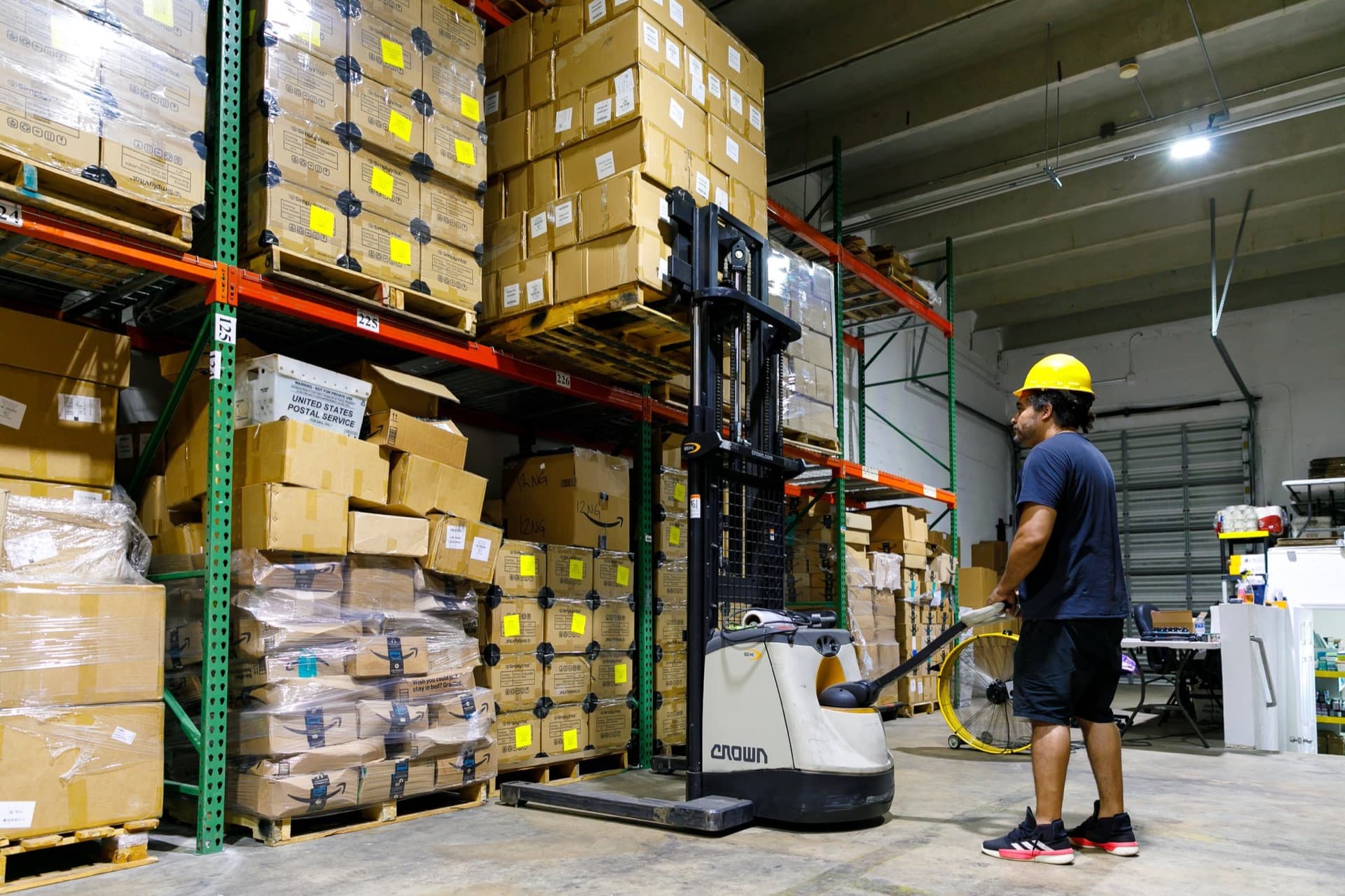
The right questions, not the right answers
The single best signal a 3PL is worth your time is how they answer questions about their own operating mistakes. Vague answers mean vague SOPs. Specific answers — with timestamps — mean someone is actually running the floor.
I run a prep center, so I sit on the other side of these calls. The sellers I respect most are the ones who interrogate me before they ship a single unit. They are not being difficult. They are protecting their inventory, their Amazon account health, and their cash. Below are the twelve questions I would ask if I were the one shipping out. For each, I have written what a strong answer actually sounds like and the red flag that should make you walk.
You do not need fancy phrasing. Ask plainly, and listen for whether the person on the other end is describing a system or improvising.
SOPs and accuracy
This is the foundation. A 3PL that cannot describe its own process precisely will fail you in exactly the ways it cannot describe.
- What is your receiving turnaround, measured from dock to checked-in? A strong answer is a number with a unit and a condition: "Most shipments are received and counted within 24 to 48 business hours; large pallet-ins can take longer and we will flag it." Red flag: "Pretty fast, usually." No number means no measurement.
- What is your inventory accuracy rate, and how do you measure it? Strong: they cite a method — cycle counts, scan-verified putaway — and admit it is not 100%. Red flag: "We never lose anything." Nobody runs a perfect warehouse; that answer means they are not counting.
- How do you handle a count discrepancy against my supplier's packing slip? Strong: they quarantine the SKU, photograph it, notify you before doing anything, and wait for your call. Red flag: they "just adjust the numbers" or assume the supplier is right.
- Walk me through your FNSKU and labeling SOP. Strong: they confirm label placement (over the manufacturer barcode), scan to verify the FNSKU matches the listing, and handle poly-bagging, suffocation warnings, and expiration formatting per Amazon's rules. Red flag: they cannot name the FNSKU or talk about labels as an afterthought.
Billing transparency
Most disputes I hear about are not theft or damage. They are surprise invoices. Get the price list in writing before anything moves.
- Send me your full line-item rate card — every fee, not just per-unit prep. Strong: a written sheet covering receiving, prep, labeling, palletizing, box fees, and outbound. Red flag: a single blended number, or "we'll figure it out as we go."
- What are the fees that are easy to miss? A trustworthy operator will volunteer them: minimums, re-labeling, oversized handling, disposal, photo requests. Red flag: "There are no hidden fees" with nothing further. Everyone has edge-case charges; honesty is naming them upfront.
- How and when do you bill storage? Strong: a clear cadence — say, per cubic foot billed monthly, with a stated cutoff date and how they prorate. Red flag: vague storage terms, or storage that quietly balloons because nobody told you long-tail inventory was racking up charges.
Communication and SLAs
You are not buying warehouse space. You are buying responsiveness when something goes sideways at 4pm on a Friday.
- Who is my point of contact, and what is your response SLA? Strong: a named person or a shared inbox with a committed window — "you'll hear back within one business day, faster during business hours." Red flag: a generic support address and no time commitment. Our own hours are Mon–Fri 9am–6pm ET, and I think any 3PL should be able to tell you exactly when a human will reply.
- What software or WMS do you use, and what visibility do I get? Strong: they give you a portal or regular reports showing received quantities, on-hand inventory, and outbound status without you having to ask. Red flag: "We'll email you a spreadsheet sometimes." If you cannot see your own inventory, you do not control it.
Compliance and claims
When units arrive damaged or go missing, the difference between a good and bad 3PL is the process, not the apology.
- What is your damage and claims process? Strong: damage is documented with photos on receipt, you are notified before anything ships, and there is a written path for filing a claim with a stated timeline. Red flag: damage gets discovered downstream — by Amazon, or by your customer in a return.
Scaling and accountability
The relationship that works in March has to survive Q4. Test for it before you commit.
- How do you handle capacity and peak season — Q4, Prime events, a sudden 5x order? Strong: they describe how they staff up, how much lead time they need, and the honest limits of their footprint. As a smaller operation in a 2,500 sq ft warehouse, I would rather tell a seller "here is what I can absorb and here is where I would tap out" than overpromise. Red flag: "No problem, we can handle anything." Capacity is physical; an operator who pretends otherwise will drop your shipments first.
- Can I talk to two current clients, and what happens when you make a mistake? Strong: real references, and a candid story — "we mislabeled a batch last fall, caught it on our scan check, re-did it on our dime, and changed the SOP so it can't recur." That is the answer the whole article is built around. Red flag: no references, or a claim that they have never made a mistake.
How to read the whole conversation
Take notes on a single call and look at the pattern, not any one answer. Did they give you numbers? Did they volunteer their own weak spots? Did they describe systems or feelings? A 3PL that counts its inventory, names its fees, and owns its errors will tell you so without flinching. The ones that deflect on the easy questions will deflect on the hard ones too — usually right when your inventory is on the line.
Pick the partner whose worst-case answers you can live with, because every 3PL has a worst case. The honest ones just tell you about theirs first.
If you want to run these twelve questions past a real operator — or just compare notes on what good looks like — contact us and ask away.